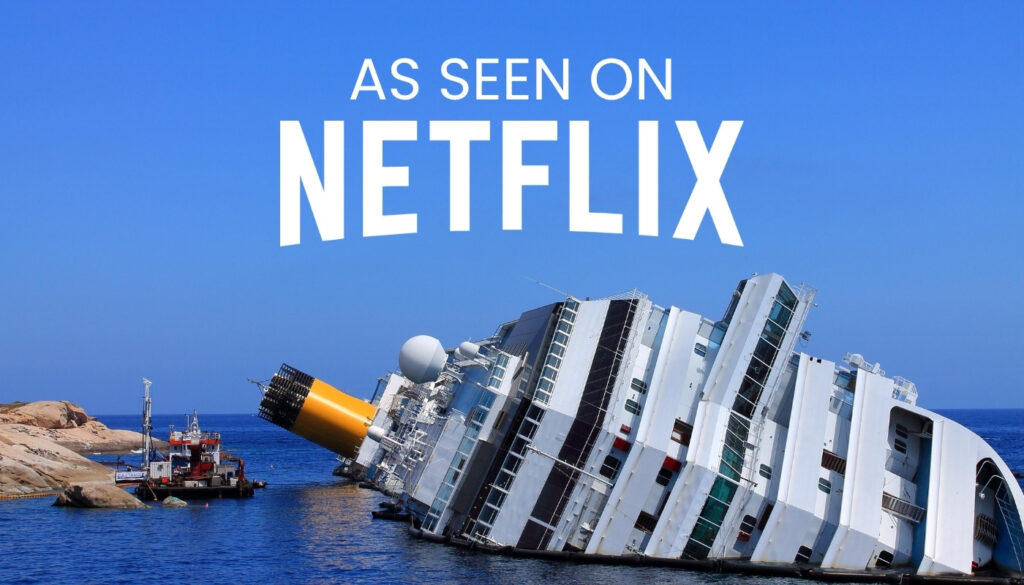
Thanks to a new Netflix documentary, Shipwrecked: Nightmare at Sea, one of cruising’s darkest chapters is back in the spotlight. If you’ve seen it advertised and found yourself wondering what actually happened that night, here’s the story behind the headlines.
What Happened to Costa Concordia?
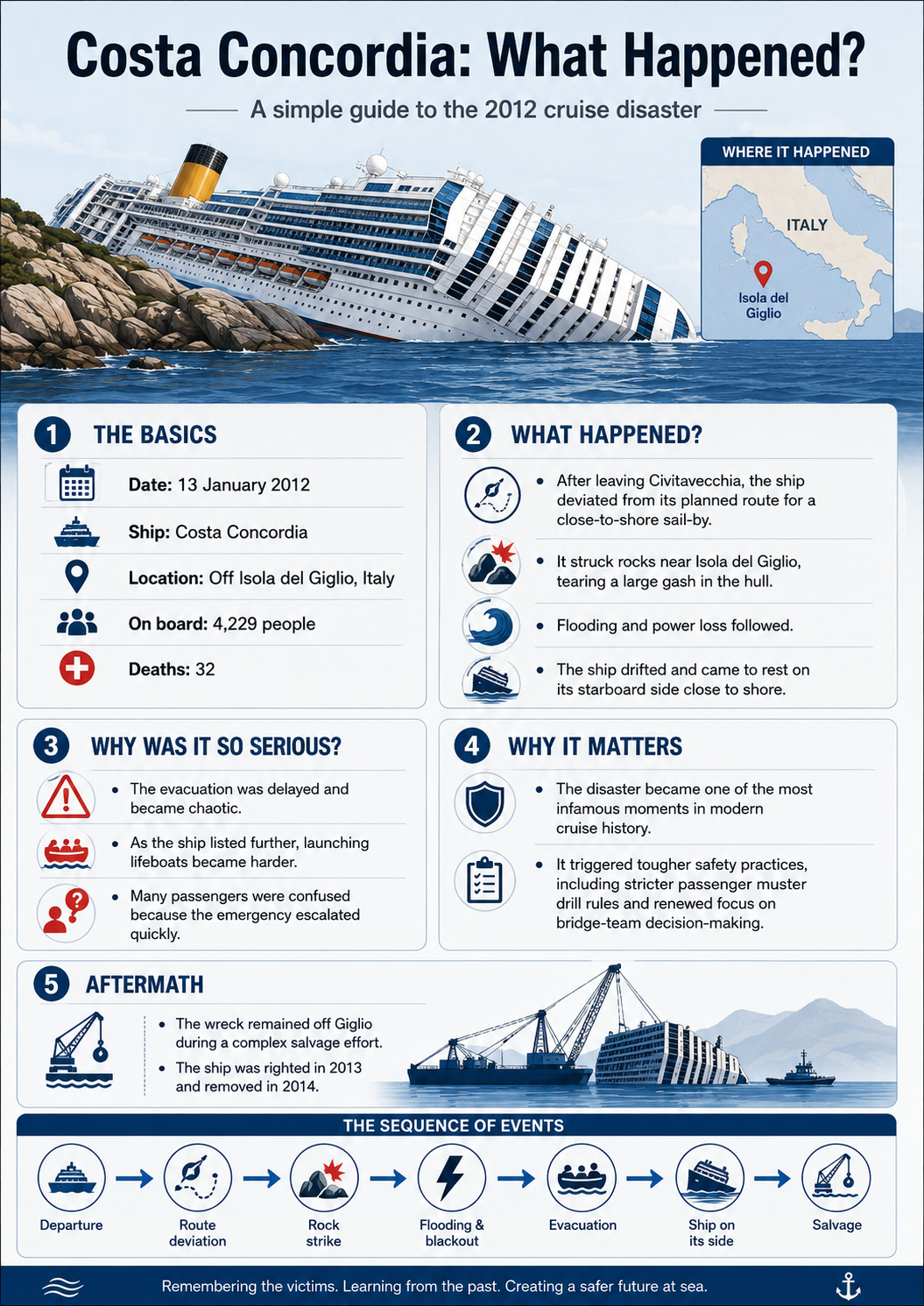
On the evening of 13 January 2012, Costa Concordia departed Civitavecchia, Italy, on a seven-night Mediterranean cruise. Everything appeared to be routine.
Then the ship deviated from its planned route to perform what’s known as an inchino, or “sail-by salute”, passing unusually close to the island of Giglio. It wasn’t part of the planned voyage. It was a manoeuvre intended to provide those onboard, and people ashore, with an impressive close-up view of the ship. WTF.
Are “sail-by salutes” illegal?
Surprisingly, no. Before Costa Concordia, close “salute” sail-bys were an accepted, if fairly uncommon, tradition in parts of the cruise industry. The disaster didn’t expose an illegal practice. It exposed a risky one.
Since then, cruise lines have largely abandoned the tradition altogether. It turns out bringing a 114,500-tonne ship within touching distance of an island isn’t quite as charming as it once seemed.
Unfortunately, it also brought the vessel dangerously close to underwater rocks.
At around 9:45 pm, Costa Concordia struck a reef, tearing a hole approximately 53 metres (174 feet) long in the hull.
That’s roughly the length of fourteen family cars parked bumper to bumper.
Water rapidly flooded several watertight compartments, electrical systems began to fail, and the ship slowly began listing to one side.
More than 4,200 passengers and crew were onboard. Sadly, thirty-two people lost their lives.
The Decision That Changed Everything
Cruise ships don’t simply wander wherever they fancy. Modern cruise routes are carefully planned using electronic charts, GPS, radar and strict navigational procedures. Deviating from those routes isn’t something that happens by accident.
One decision changed everything.
Then Came the Evacuation
If you’ve ever been on a cruise, you’ll know the muster drill can sometimes feel like an inconvenience.
Stand here. Watch the video. Listen to the announcements.
It turns out there’s a very good reason cruise lines insist on them.
One of the biggest criticisms following the Costa Concordia disaster was the delay in recognising the seriousness of the situation. Passengers were initially reassured there was simply an electrical issue, even as the ship continued to list more dramatically.
As conditions worsened, lifeboats on one side of the ship became increasingly difficult, and eventually impossible, to launch.
What followed was confusion, fear and an evacuation carried out under rapidly deteriorating conditions.
The Captain Became the Story – Captain Francesco Schettino
It’s rare for one person to become almost synonymous with a maritime disaster.
But that’s exactly what happened here.
Captain Francesco Schettino became the focus of worldwide attention after leaving the ship before every passenger had been evacuated. What the actual hell?
During the rescue operation, an Italian Coast Guard officer famously ordered him to return onboard. The recording of that conversation quickly spread around the world and remains one of the most recognisable moments from the disaster.
Schettino was later convicted of multiple offences, including manslaughter, causing a shipwreck and abandoning ship. He was sentenced to 16 years in prison.
Why Costa Concordia Is Often Compared to Titanic
Both disasters fundamentally changed the way the public viewed passenger ships, dominated headlines around the world, and sparked major conversations about passenger safety.
But Costa Concordia feels different because it happened in the smartphone era.
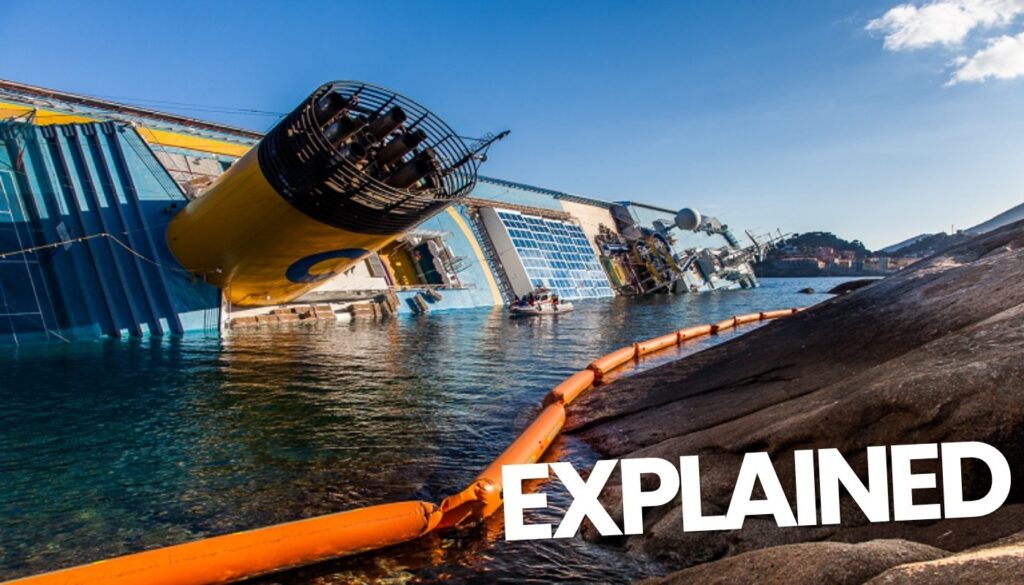
Millions of people watched as a 114,500-tonne cruise ship lay on its side just metres from the shore. It almost looked unreal.
Like someone had accidentally Photoshopped an entire cruise ship into the wrong position.
That image became this generation’s equivalent of Titanic disappearing beneath the Atlantic. Not because the circumstances were the same, but because they were equally unforgettable.
Did Costa Cruises Ever Recover?
It’s impossible to talk about Costa Concordia without asking another question.
Did this permanently damage Costa Cruises?
The short answer is… yes, but perhaps not in the way you’d expect.
Immediately after the disaster, bookings fell, Costa’s reputation took a significant hit and the company faced years of investigations, legal claims and relentless media attention. For a while, the Costa name became almost inseparable from Concordia.
Fast forward to today, and Costa Cruises is still operating a modern fleet and welcoming hundreds of thousands of guests every year. But ask someone who doesn’t regularly cruise to name a Costa ship…
They probably can’t.
Ask them to name one Costa-related story…
Chances are they’ll say Costa Concordia.
That’s the unfortunate reality.
For regular cruisers, Costa has largely moved on. New ships have joined the fleet, safety procedures have evolved and millions of guests have sailed without incident.
For the wider public, however, Concordia remains the first thing that comes to mind whenever Costa Cruises is mentioned. Fair or not, that’s a remarkably difficult association for any brand to shake.
Did Cruising Change Afterwards?
Yes. Quite significantly.
Whenever a major accident happens, industries don’t simply shrug and carry on.
Costa Concordia prompted cruise lines around the world to review emergency procedures, bridge resource management, navigation procedures, evacuation protocols and crew training.
Passenger muster drills became even more closely scrutinised.
Cruise lines also placed renewed emphasis on ensuring bridge teams could question decisions before they became dangerous.
Ironically, many people cruising today are sailing under stricter safety standards because of the lessons learned from Costa Concordia. It’s one of those rare moments where a tragedy genuinely changed an entire industry.
Should This Netflix Documentary Put You Off Cruising?
Costa Concordia was a horrific tragedy. It was also exceptionally rare.
Every time a cruise-related documentary lands on Netflix, social media fills with comments saying things like:
“This is exactly why I’d never go on a cruise.”
Which is understandable. But it’s also a little like refusing to fly because you’ve watched a documentary about a plane crash. Millions of people cruise safely every year.
The Costa Concordia disaster wasn’t caused by cruise ships simply existing.
It was the result of a series of human decisions that should never have happened.
That’s an important distinction.